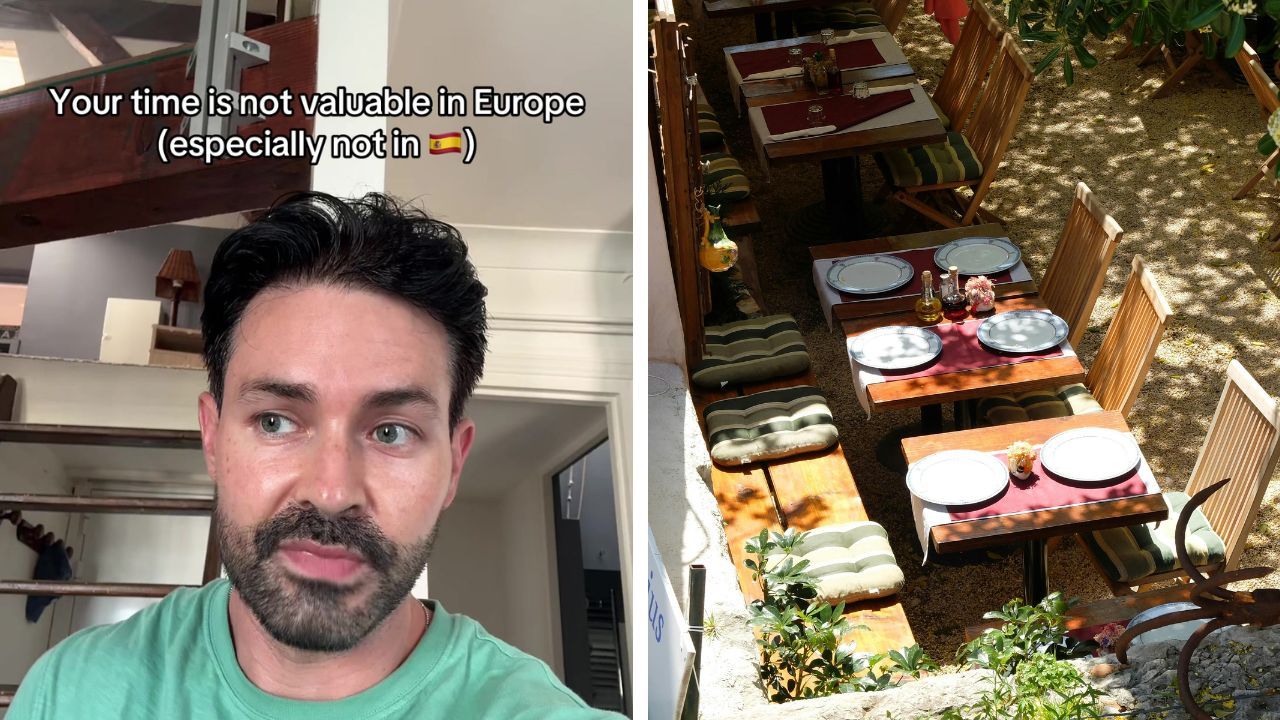
A traveler who posts on TikTok under the name @travelingwithadam has complained about the service he received at a restaurant in Spain. The video prompted commenters to discuss what customers should expect when dining out in Europe. In the July 17 video, the creator said that living in Europe has taught him that "your time is not valuable," and he gave Spain as his main example. He said that a single meal out could take four hours since customers might have to wait to be seated and ask for a menu. After that, they may need to look for a waiter.
The video was captioned "I really love it here, but urgency is a very North American concept" and has over 4,700 likes and thousands of comments. The discussion in the comments section soon moved from a single visitor's experience to a more general discussion of the differences between American and European restaurant culture.
Many commenters didn't think that slower service necessarily implies poor service. One commenter joked that Americans eat dinner as if it were "a timed event." Another person claimed that always being approached by servers would be "annoying and rude" because customers could call for a server when they needed one.
@travelingwithadam I really love it here, but urgency is a very Norh American concept ? #europe #spain #europetravel
♬ original sound - travelingwithadam
Many commenters attributed the difference to cultural expectations rather than differences in the quality of service.
A user who said they were British noted that European diners generally prefer to be left alone rather than being constantly asked if everything is okay. Another commenter said that dining out is about spending time with friends and family, not just about eating and then leaving.
Some commenters also claimed that American restaurant service seems intrusive to them, as servers often check on the tables, provide extra drinks or food, and bring the bill rather quickly, which makes them feel rushed. Others referred to the practice of tipping in the United States, as servers heavily rely on tips from customers. In the video, too, the creator in fact suggests that Spanish servers might have less reason to come back to a table since tipping is not the same as in the United States. Yet, many said they had always been given kind and attentive service in Spain.
People also questioned the generalization regarding Europe. A number of commenters stated that after living in Spain for many years, they had not come across the problems mentioned in the video. Others noted that restaurant customs can vary considerably from country to country, between cities and even from one establishment to another.
By the end, the debate was less about whether Spanish restaurant service is objectively good or bad and more about what diners themselves consider to be good service.