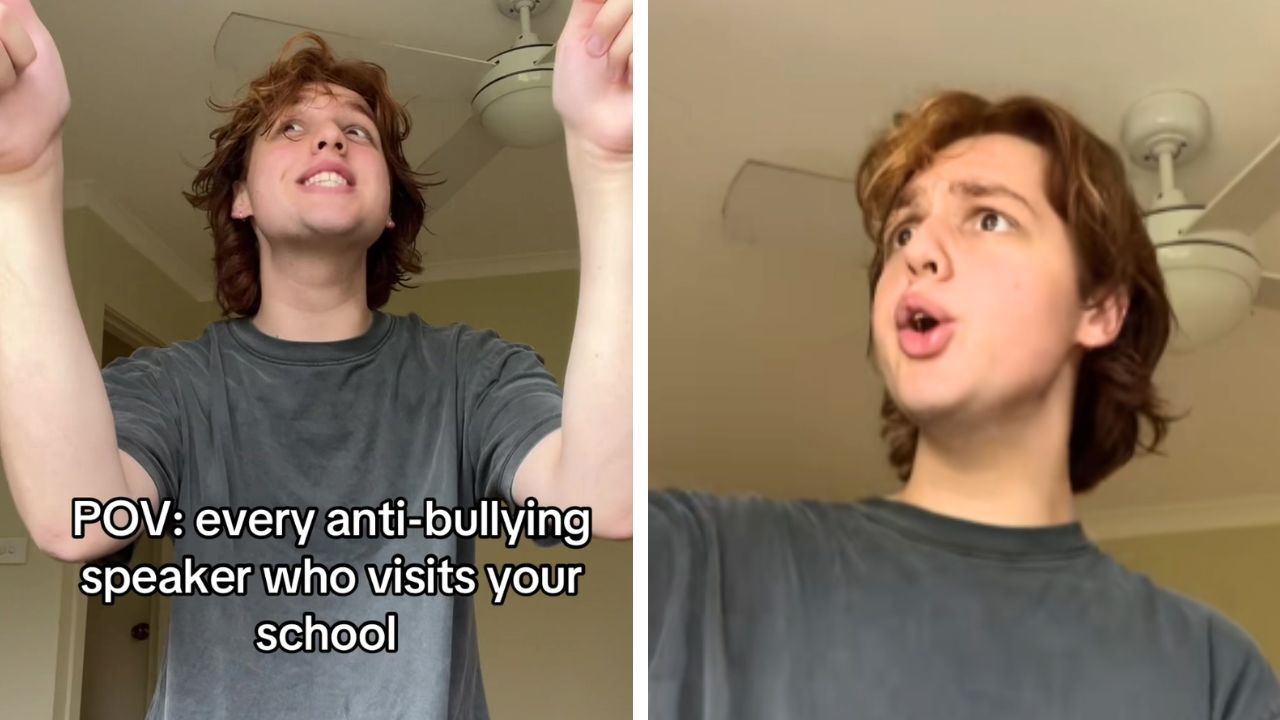
A TikTok video making fun of school anti-bullying assemblies has drawn thousands of comments from people remembering the awkward presentations and well-meaning speakers who struggled to connect with students. The video, uploaded by Aidan Watts (@aidanwattss), is a skit titled "POV: every anti-bullying speaker who visits your school."
The clip, captioned "I feel so bad for them," satirizes a guest speaker trying to get a skeptical school audience interested. The post has around 2 million likes and more than 4,000 comments.
In the skit, the fictional presenter, Mr. Thomas, introduces himself as TJ and says his favorite food is Oreos.
He then tries to conduct a call-and-response activity about bullying, but a student's unexpected comment interrupts him. The presenter goes on to share a personal account of being bullied as a child, yet his efforts to get the students involved in the discussion are met with obvious indifference and laughter.
@aidanwattss i feel so bad for them #relatable #cringe #joke #school
♬ Spooky, quiet, scary atmosphere piano songs - Skittlegirl Sound
The exaggerated portrayal struck a chord with viewers because it reflected their own school experiences. A number of them recalled presentations that had little to do with the actual situations students faced. One person was told to respond to bullying with: "Stop. I don't like it when you're making fun of me." They said that responding that way would always make the problem worse.
Some described speakers who relied on personal anecdotes or straightforward advice that students found difficult to put into practice. One person remembered an anti-bullying talk that used the analogy of crumpling a sheet of paper. Another recalled being urged to participate in group activities that left students feeling uncomfortable.
Several users said they had been bullied themselves but still laughed during these presentations. Others remembered that the school assemblies did little to address the bullying they experienced in hallways and classrooms.
However, some sympathized with the speakers, who were undertaking a difficult task in front of an audience that might not be willing to listen. Others remembered presentations that had actually helped because the speakers' personal experiences were relatable.
Bullying prevention can be a challenge in schools when the lessons feel disconnected from students' real experiences. Anti-bullying education can teach students to recognize harmful behavior and intervene safely. However, general advice may not account for peer pressure and the social situations that can make reporting bullying difficult.