
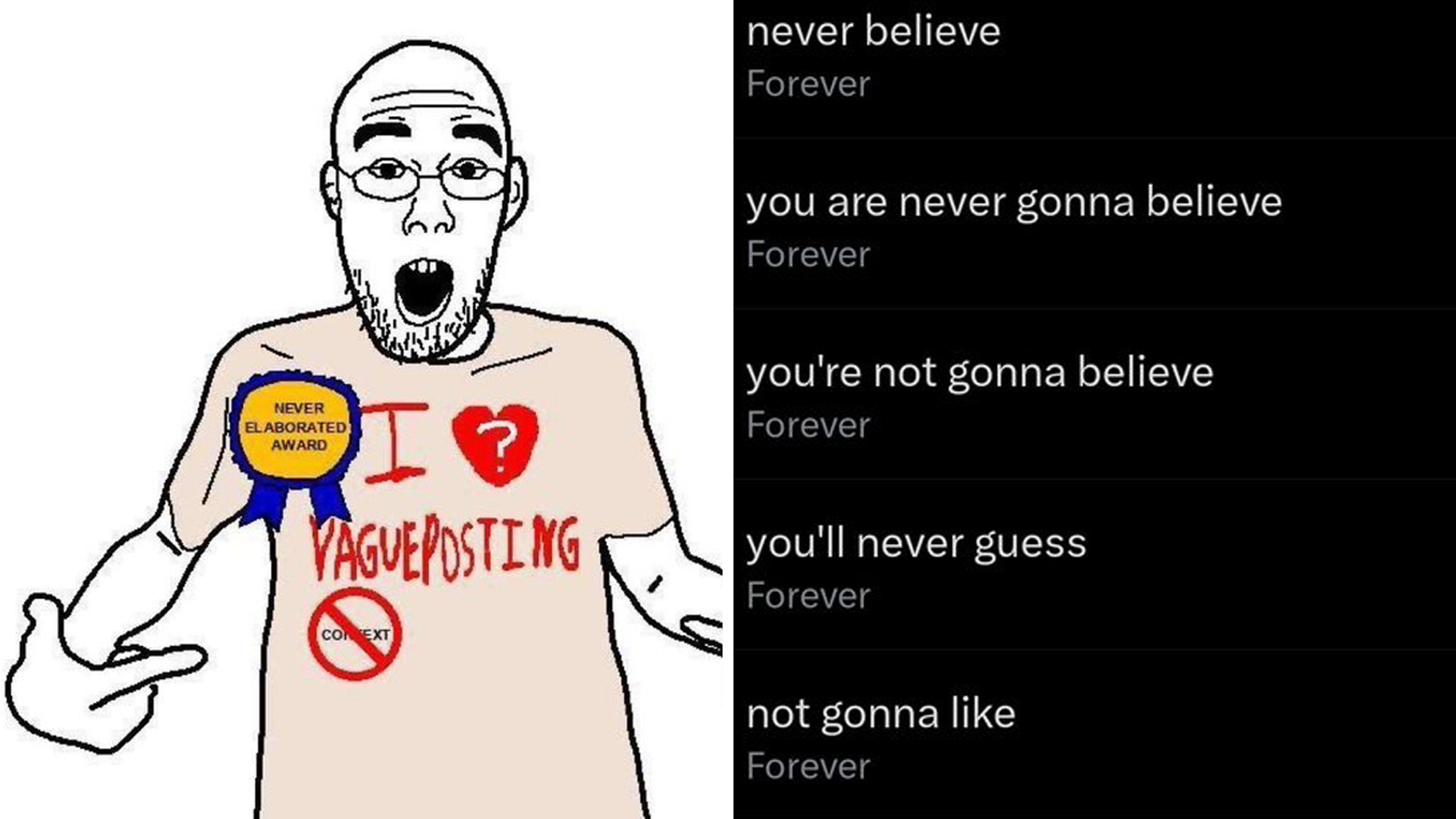
The "vagueposting" phenomenon has taken over X, turning timelines into a never-ending scroll of half-sentences and users insisting you “won’t like the answer.”
The trend kicked off after one cryptic water bottle tweet in late December racked up tens of millions of views, proving that saying almost nothing can generate massive engagement.
Since then, vagueposting has spread rapidly across the platform, and just as quickly, users have begun turning against it.
What is vagueposting?
The term "vagueposting" was occasionally thrown around social media before last December to describe posts vaguely referring to another person or the current discourse. However, it became a viral phenomenon after 16-year-old Ellis (@JimmyGibbsJrFan) tweeted something ominous about a suggestion for a new water bottle design.
On Christmas, @HUMUORn tossed out an old idea suggesting that the mouth of the bottle be placed at an angle rather than straight upward for easier drinking. The next day, Ellis quote tweeted to claim that "theres a reason why we dont make water bottles like this."
theres a reason why we dont make water bottles like this https://t.co/kErgkQLtRP
— Ellis (@JimmyGibbsJrFan) December 26, 2025
What is that reason? Ellis held a whole conversation with themselves demanding the answer and joking that it's because the proposed design "can give you AIDS" and "my little brother passed away after drinking from one because it became sentient and beat the sh*t out of him."
It soon became clear that there is no reason not to make a bottle like that—or if there is, Ellis doesn't know and/or doesn't care. The point of the post was to trick and frustrate others, and it worked extremely well. Their initial quote tweet gained over 32.6 million views and 168,000 likes.
halsey was right https://t.co/tVOfypR6LC
— @ jules (experimented on) (@lonelyisthejulz) January 11, 2026
That kind of engagement always attracts imitators. On Jan. 11, @lonelyisthejulz posted their infamous "halsey was right" tweet. User @neytirisa later gained 6.3 million views by asking if they can "say it" about the new Avatar film.
"You're not gonna like the answer" becomes the entire joke
As January wore on, X feeds began to fill up with vagueposts to the point that it got old and annoying. Worse, anger around the practice started hitting those who weren't intending to vaguepost at all.
User @socynicalbadum experienced this after referencing a specific quote from the Apple TV sci-fi series Pluribus. The lead character Carol Sturka, played by Rhea Seehorn, does indeed say "why she gotta be so goddamn f*ckable?"
Tweeting "looking back the why she gotta be so goddamn f*ckable was such a crazy f*cking moment" was therefore not vagueposting. However, the author received hate from those not familiar with the show because it read like that kind of bait, leading to demands that we "abolish vagueposting" in the comments.
Days later, people were vagueposting about vagueposting.
I know why vagueposting does so well and you’re not gonna like the answer
— a local (@jedwill) January 19, 2026
"I know why vagueposting does so well and you’re not gonna like the answer," wrote @jedwill.
Meanwhile, the trending tab filled up with phrases like "you're not gonna believe" and "won't like the answer." Now the big thing is theories on why vagueposting works so well.
Director Demi Adejuyigbe (@electrolemon) posited that "the algorithm senses that you are clicking on those tweets (engagement) to see the replies for context so it promotes vague tweets over ones that explain enough that you can read and scroll past them."
The internet is chaotic—but we’ll break it down for you in one daily email. Sign up for the Daily Dot’s newsletter here.