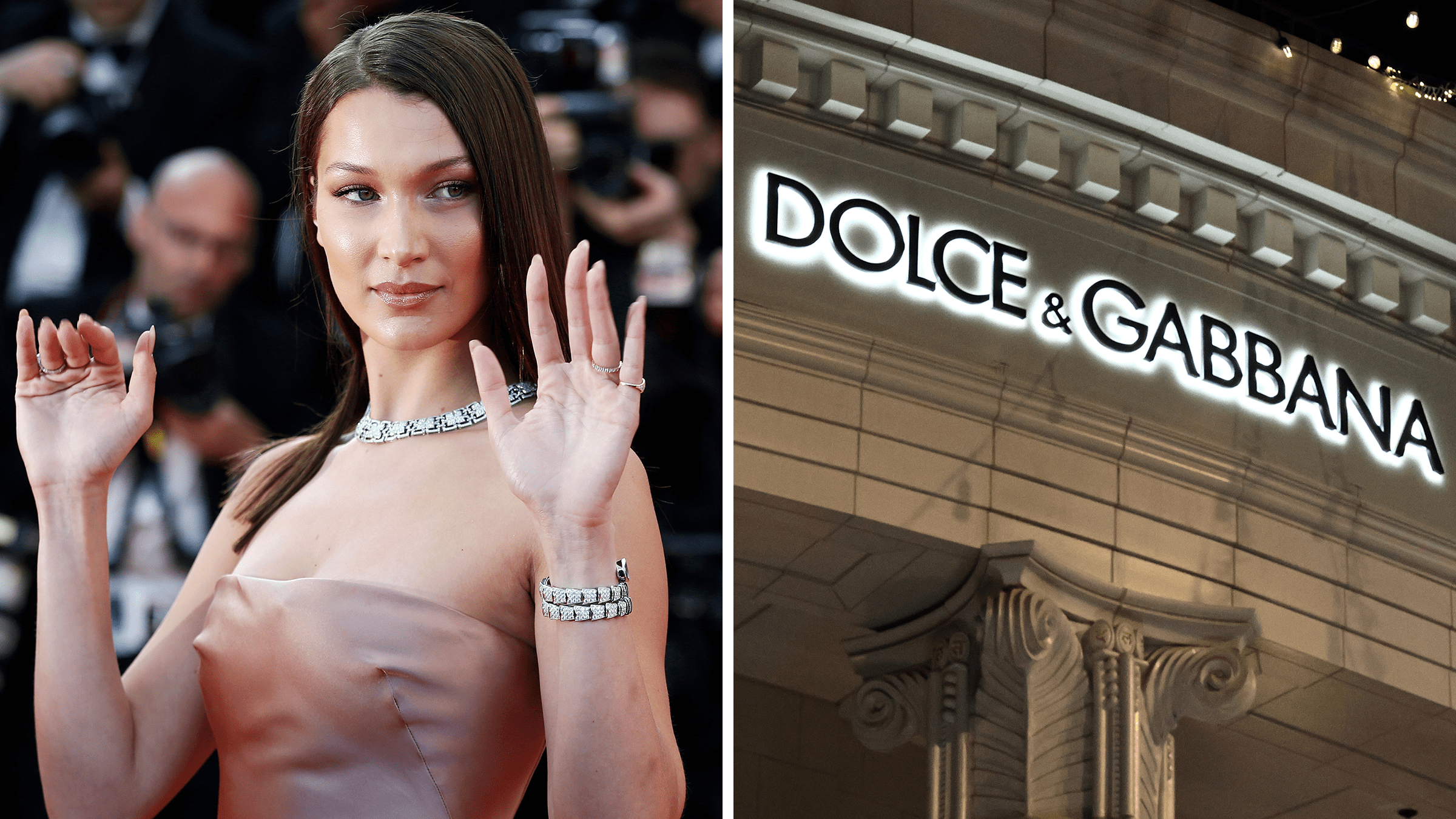
Dolce & Gabbana is facing renewed backlash after its Fall–Winter 2026–2027 menswear show at Milan Fashion Week drew criticism for an apparent lack of diversity among its models.
As images from the runway circulated online, fashion commentators and viewers called out the overwhelmingly white casting, prompting supermodel Bella Hadid to publicly condemn the luxury brand and reference what she described as a long record of harmful behavior.
Dolce & Gabbana’s model casting drew immediate online criticism
Fashion commentator and visual arts creator Elias Medini (@ly.as) posted a video breaking down the show’s casting.
In the clip, which reached more than 2.4 million views in just two days, he displayed headshots of the models, remarking, "Fifty shades of white. No one single Asian, not one single dark-skinned model, I believe not a single Arab or blond guy."
Medini added that the lineup was "not normal." Meanwhile, the video sparked thousands of comments and shares, pushing the issue beyond fashion insiders.
Model Bella Hadid joined the discussion in Medini’s comment section. She wrote, "Shocked people actually support this company still it’s embarrassing. Models / stylists/ casting the whole d*mn thing."
Shortly after, she followed up with a second comment, adding, "Beeeen canceled…. years of racism sexism bigotry xenophobia … how are we shocked still?"
As a half-Palestinian model, Hadid's comments resonated with viewers who connected the casting debate to broader concerns about racism in fashion.
"Slow" fashion designer Zahra Omarji wrote, "Its giving 'genes are passed down from parents to offsprings.'"
Meanwhile, fashion editor and designer Gabriella Karefa-Johnson wrote, "This is what happens when the powers that be continue to make excuses for a brand that is consistently racist, homophobic, xenophobic in order to keep accepting their advertiser dollars. Micro aggressions become macro aggressions, and mistakes become modus operandi."
The long history of outrage against Dolce & Gabbana
The brand’s history influenced how critics interpreted the collection. The brand was criticized in 2007 for an ad campaign that depicted a pinned-down woman, surrounded by attractive men.
In 2012, Dolce & Gabbana faced backlash over earrings worn by white models that resembled Blackamoor statues, a common racist trope in European "Old World" luxury, according to historian Adrienne L. Childs.
In early 2016, the release of a Dolce & Gabbana shoe called the "Slave Sandal" drew widespread criticism. Then, during President Donald Trump’s first term, the brand also received pushback for dressing Melania Trump. Instead of stepping away, Dolce & Gabbana released a faux protest video and sold a "#Boycott Dolce & Gabbana" T-shirt for $245.
The luxury fashion brand was also criticized after making out-of-context statements about not wanting a Japanese designer to design for Dolce & Gabbana, fatphobic comments and products, and more.
The internet is chaotic—but we’ll break it down for you in one daily email. Sign up for the Daily Dot’s newsletter here.