Last year, BetterHelp reached out to Mickey Atkins, licensed social worker, clinical psychotherapist, and mental health influencer, to offer her a sponsorship. Soon after, they sent her a cease-and-desist. So what happened?
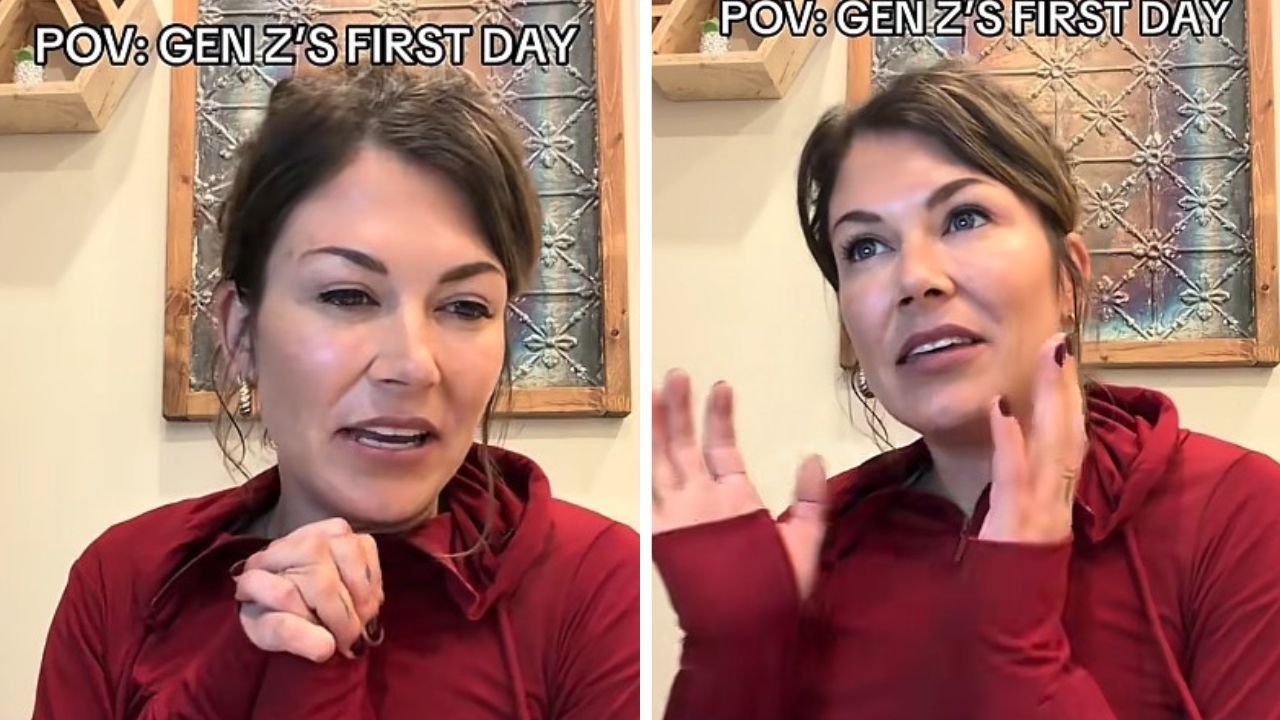
Atkins released a YouTube video in September 2023 talking about how the mental health platform had initially reached out to sponsor her, but after looking into them and speaking with her in-person colleagues, she decided against it.
“At the time, you know, my channel was not particularly large. I certainly hadn't hit even 100,000 subscribers yet, so I was sort of out of my depth in understanding what [sponsorships] even meant,” Atkins explained in an interview with the Daily Dot.
In her search for understanding, Atkins stumbled upon some anecdotes from colleagues she found concerning. After thoroughly researching the company, Atkins decided against taking the sponsorship. When she made a video about her reasoning, BetterHelp threatened legal action.
“I detailed all of [my concerns] in the video, and then a few months later, I got a cease-and-desist letter detailing essentially, ‘You've violated all of these laws and you're defaming the company,’” Atkins recalled. BetterHelp told her to take the video down within a week, or else they would do it for her.
As a small creator, Atkins didn’t want to engage in a legal battle she couldn’t afford, so she set her original video to private. In response, BetterHelp sent a follow-up email thanking her for complying and asking her to sign what was, “to [her] understanding, a legally binding document assuring that in the future, [she] would never speak about BetterHelp in a disparaging manner.”
Atkins didn’t sign the document—in fact, she didn’t respond at all. She certainly never forgot about the experience, though.
Why was everyone mad at BetterHelp?
Atkins’ decision to decline the BetterHelp partnership isn’t surprising: if “problematic” sponsorship online had a mascot, there’s a good chance it would be BetterHelp.
Founded in 2013 by Alon Matas and Danny Bragonier, BetterHelp quickly became one of the most recognizable (and controversial) telehealth therapy platforms on the internet. As of publication, the company’s website hails it as “the world’s largest therapy service,” boasting nearly 4 million customers and over 392 million virtual therapy sessions.
A majority of BetterHelp’s reach stems from its aggressive presence in the social media and online creator spaces. If you watched YouTube at any point in the mid-to-late 2010s, you probably saw an ad read for BetterHelp. From Shane Dawson to Philip DeFranco, almost every big creator was sponsored by the service at one point or another.
In 2018, a callout video from Felix Kjellberg (aka PewDiePie) accused the company of shady practices and sponsorship dipped for a while. However, over the last few years, fans have noticed that BetterHelp promotion is back and better than ever.
YouTube veterans like Anthony Padilla, Good Mythical Morning, and Jacksfilms have all been doing ad reads for the service over the last year (or, in Padilla’s case, the last few years). The phenomenon isn’t just limited to YouTube, either—podcast insight platform Magellan AI lists BetterHelp as the number one sponsorship spender in June 2024, and indicates that the company actually spent less in June than it did in May.
BetterHelp’s sudden ubiquity may look like a successful redemption campaign, but most of the creators promoting the service are facing severe fan pushback in their comment sections, on Twitter, and on their respective subreddits.
Arguments against the sponsorship can range from leftover 2018 stigma to a bad personal experience, but usually, people are most concerned about the recent lawsuit the U.S. Federal Trade Commission brought against BetterHelp for unsound data-sharing practices.
Why is everyone mad at BetterHelp (again)?
In March 2023, the FTC put out a press release announcing they were going to “Ban BetterHelp from revealing consumers’ data” and charge $7.8 million in consumer damages. The FTC accused BetterHelp of hazy, misinformative privacy disclosures and sharing consumers’ data with third-party entities like Facebook without their consent or knowledge.
“[BetterHelp] disclosed Visitors’ and Users’ Intake Questionnaire responses, as well as their email addresses and IP addresses, to Facebook for advertising purposes, as well as for Facebook’s own purposes,” the FTC complaint states.
In the complaint, the FTC accuses BetterHelp of using false privacy assurances to convince users to relinquish their personal information and fill out the intake questionnaire. The FTC also notes that, while BetterHelp doesn’t share the entirety of the questionnaire with third parties, for a therapy and mental health platform, even information as simple as a user’s email address can be considered a disclosure of the user’s health information.
“Because [BetterHelp] collects certain types of personal information from consumers when they take affirmative steps to sign up for the service, [BetterHelp’s] disclosure of that information to a third party would implicitly disclose the consumer’s interest in, or use of [BetterHelp] and therefore constitute a disclosure of the consumer’s health information,” the complaint reads.
The complaint presents several other allegations, including: a failure to disclose site cookies, a failure to fully disclose that users’ data could be used for targeted ads, and at least one instance of BetterHelp partnering with Facebook to show ads to users who entered their email address but did not subscribe to the platform.
The FTC also provides examples of BetterHelp putting the seal of the Health Insurance Portability and Accountability Act, a federal law which famously protects patient confidentiality, next to other logos on their website. They were not HIPAA-certified at any point while the seal was allegedly up.
The case was finalized in July, and BetterHelp ended up settling with the FTC for $7.8 million, but admitted no wrongdoing. This past June, the FTC announced that BetterHelp officially began to send out refund payments to customers who paid for BetterHelp’s services between 2017 and 2020.
How are fans reacting to this ruling?
“Admitting no wrongdoing” did not absolve BetterHelp of the internet’s wrath, nor did the approximately $10 refund. Fans have continued to call for their favorite influencers to end their partnerships, and nowhere is this phenomenon more apparent than in the Cinema Therapy subreddit.
Cinema Therapy is the joint YouTube channel of filmmaker Alan Seawright and licensed marriage and family therapist Jonathan Decker. Together, the pair release half-hour discussions about the psychology behind different movies.
As of the last few months, they’ve also released several YouTube community posts and Reddit replies about their choice to continue partnering with BetterHelp, which is an ongoing debate among their fans. The channel’s response is unique in that it not only acknowledges the backlash head-on but thoroughly engages with it.
Cinema Therapy declined to comment, but directed attention to a statement Decker posted on their subreddit two months ago. In his post, Decker goes through fans’ arguments point-by-point and explains his reasoning for continuing to work with BetterHelp.
Addressing the BetterHelp Concerns Head-On (Deep Dive with Sources)
byu/JonoDecker incinema_therapy
How do influencers feel about BetterHelp now?
Decker points out that the majority of BetterHelp’s allegations revolved around cookie practices that are common to many websites, but acknowledges that “health providers must be held to higher standards.” Later in the statement, he expresses confidence that the company is now meeting these higher standards post-settlement.
“So why did we resume with BetterHelp?” Decker wrote. “First, because they corrected their practices years ago, before the FTC complaint. They continue to refine things on their end. They changed the way they do marketing. All advertising cookies are opt-in only. No questionnaire information is shared. Everything on their website is clear as day.”
Atkins feels differently about BetterHelp’s privacy practices and expressed in her video that she has a difficult time believing a company could actually shape up after that breach of trust.
“[It was scary] finding out that there were essentially clauses in the privacy policy that allowed BetterHelp and their parent institution to use consumer and client data for things like targeted ads,” Atkins told the Daily Dot. She noted that, coming from a traditional psychotherapy background, she felt that BetterHelp’s privacy policy was “not at all the norm.”
“In case you're not familiar, in traditional psychotherapy, we don't collect any data except when it's absolutely necessary in things like screening tools to help with diagnosis, for example,” she explained. “Or, you know, to retain a client's name and phone number in our intake packet, simply to keep records and for, like, billing insurance.”
In his statement, Decker clarified that, were more detailed aspects of the questionnaire shared, Cinema Therapy would likely not be partnering with them now. However, since that wasn’t the case, Decker sees no reason not to support what he believes is a reformed company. He noted that BetterHelp paid the required settlement fee, reinforced privacy policies, and agreed to third-party evaluations every two years.
“Between measures BetterHelp had already taken in 2020 and their later compliance with FTC decisions, they are not the company they once were. These days they look pretty airtight to me,” Decker concluded.
The final two sections of Decker’s post are dedicated to affirming that BetterHelp has changed and that it is an accessible, affordable option to many people.
“Is BetterHelp perfect? No. But this is a case where we're not willing to let perfect be the enemy of good,” he emphasized. “And BetterHelp does so much good for so many people, many of whom decided to get help because of a creator's sponsorship segment.”
Atkins has a different cost-benefit analysis when it comes to promoting the platform to fans. Her biggest concern was that if she promoted BetterHelp, knowing it was imperfect, she could be responsible for fans having negative experiences with therapy.
“If one person walks away from their experience with BetterHelp, first of all, just having had a negative experience, like, I can't stomach that, right?” she said. “That's also part of our career and professional ethics.”
On the sponsor dilemma
Dr. Mariah Wellman, assistant professor at the College of Communications at Michigan State University, can see both sides of the debate. Ultimately, she believes that the determining factor in how influencers decide sponsorships is, essentially, their social contract with their specific audience.
“When [influencers] get approached by a brand that says ‘I want you to promote this,’ the conversation they have to have is, y’know: does my audience expect this of me?” Wellman told the Daily Dot in an interview. “Not only is this ethical for me to do based on my own self, my own brand, but also, does the audience care? Does the audience expect this of me? And would the audience deem me to be a sellout if I were to promote this?”
For Atkins, remaining authentic to her audience means rejecting the BetterHelp partnership. When selecting a sponsor to work with, Atkins asks herself two questions: “First of all, is it reputable, right? Is this company gonna run off into the sunset with this money? But also, is there a legitimate connection that my audience would make with this?”
BetterHelp might pass the second question, but she isn’t sure of the first. As a therapist herself, Atkins is hyper-aware of the potential for damage a negative therapy experience can have, and so remaining authentic to her audience means turning down the sponsorship.
“I think for me, in reflecting on my own professional ethical code, one of the things that we're called to keep at the forefront of our mind is the dignity and worthiness of every human being, right?” Atkins said. “And so to me, that's not looking at aggregate data, right? That's not reducing people to statistics. That's thinking about the individual experience of each and every person.
Decker, on the other hand, seems to view the sponsorship as a way to serve his audience. According to their website, the goal of Cinema Therapy is to provide “things you can use to improve your mental health” via their movie discussions.
“Some of you have asked how I can promote BetterHelp, in good conscience, as a licensed therapist myself? That's how. Because BetterHelp is not the company today that it was years ago,” Decker wrote. “Because they've corrected the legitimate concerns we had, paid their dues to those affected, and locked down strong ethical safeguards for the present and the future.”
“But mostly, because SO many people are getting the quality support they need from licensed professionals on the platform. It really is helping, and that matters a lot to us,” Decker concluded in his statement.
Into the authenticity trap
Cinema Therapy’s biggest issue is that accepting a sponsorship like BetterHelp differs from what their audience perceives as “authentic” from them.
For channels like Good Mythical Morning, who project a particularly wholesome image, a controversial sponsor like BetterHelp might go past the boundary of what fans consider “authentic,” which leads to pushback. Similarly, for Cinema Therapy, who are self-proclaimed “Internet Dads,” the BetterHelp sponsorship might have pushed a boundary.
The key to expanding brand boundaries lies in finding a way to make it authentic. Wellman explored this complicated dynamic using YouTuber and BetterHelp advertiser Anthony Padilla as an example.
“Whether or not we agree that BetterHelp is the absolute best support someone can get, it is accessible. It may be cost-effective for them if they get this, you know, percentage off,” she said. “So while we may not love the way that Anthony is producing this kind of sponsored content on the back of his videos that he's doing, or the back of his social media platforms, or social media content, rather, there are still people who potentially benefit from this.”
Atkins, who rejected BetterHelp outright in favor of sponsorships from sex-positive and educational resources like DipSea or BeEducated, remained within the bounds of what her audience perceives as authentic, avoiding the need to reframe altogether.
While Wellman finds the framework of authenticity ethics useful for understanding the nature of relationships between creators, fans, and sponsors, she doesn’t necessarily believe in its use as an official moral code.
“I think the question we have to answer then is: does that mean it's OK?” Wellman said. “And I don't really have an answer to that.”
Internet culture is chaotic—but we’ll break it down for you in one daily email. Sign up for the Daily Dot’s web_crawlr newsletter here. You’ll get the best (and worst) of the internet straight into your inbox.