
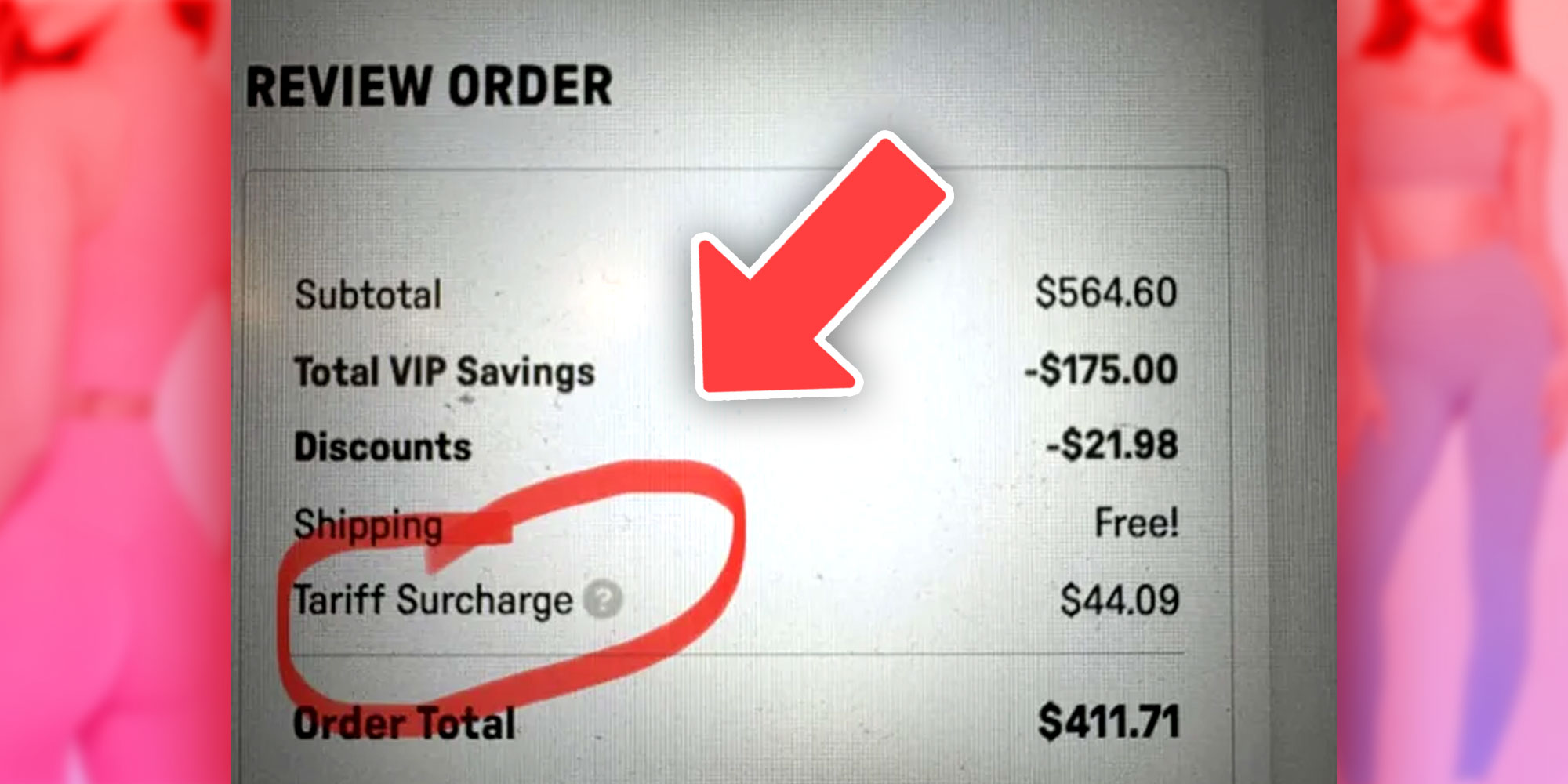
A growing number of U.S.-based companies are adding tariff surcharges to receipts, directly passing import costs to customers.
As President Donald Trump’s administration rolls out drastic and wide-ranging global tariff hikes, businesses across sectors are reacting by itemizing the fallout. Rather than quietly absorbing or burying their increased costs, companies are openly labeling them on receipts.
This emerging practice is not only reshaping how businesses handle economic pressure, but it’s also creating a new form of price transparency for consumers. In this way, they can see where federal government policies are directly impacting their lives.
Fabletics adds 'Tariff Surcharge' line item on receipts
In a post shared to the r/Anticonsumption subreddit, u/ProperMod said that their wife’s friend purchased children’s summer clothing from the clothing company Fabletics. She discovered that the system had added a Tariff Surcharge line item to the order upon checkout.
Fabletics isn’t the only company adding tariff surcharges directly onto invoices. According to Reuters, chipmaker Micron Technology announced it would begin including a tariff-related surcharge on some of its products starting April 9, 2025. The company itself is based in the United States. However, many of its raw materials and manufacturing sites are located in various Asian countries, including China, Malaysia, and Japan.
From manufacturing to consumer goods, companies of all sizes are reacting to what they describe as unsustainable increases in costs. These charges are a direct response to the Trump administration's tariffs on imported raw materials and goods, many of which U.S. manufacturers rely on. While Trump emphasized "America First" policies, many businesses can't source everything domestically, especially key components like steel or rare earth metals.
Because of this, prices for both foreign and domestic products have surged. According to Quartz, the surcharges are forthcoming in industries from electronics to construction equipment. Little Machine Shop, SWFcontract, Dynaenergetics, Honeywell, and Via Seating are just a few of the companies telling their customers that prices will rise because of the tariffs.
The new tariffs don't affect all imported goods. According to the White House's fact sheet, items such as pharmaceuticals, semiconductors, energy, and "other certain minerals that are not available in the United States" are not included. However, some of the items excluded from the broader tariffs have exclusive tariffs, such as steel, aluminum, and vehicles.
An invisible cost is now a line item
Although using a tariff surcharge line item may seem like a niche accounting tactic, their impact is widespread. For many Americans, this is their first time encountering tariffs in such a visible, personal way. Previously, companies folded tariffs into overall product pricing. Now, they mark them on receipts or announce them via official channels.
u/ProperMod’s Reddit post resonated with fellow Redditors. Many responded positively to the company seeming to take a stance about where the added costs were coming from.
"I'm glad a company is making it painfully obvious that tariffs are paid by the consumer," wrote u/findingmike.
That sentiment was echoed on X, formerly Twitter, where @krassenstein shared the Reddit screenshot and wrote, "This is the new norm in the Trump economy. I commend any companies who do this. Transparency is good and at least we know why our prices went up."
The internet is chaotic—but we’ll break it down for you in one daily email. Sign up for the Daily Dot’s web_crawlr newsletter here to get the best (and worst) of the internet straight into your inbox.