
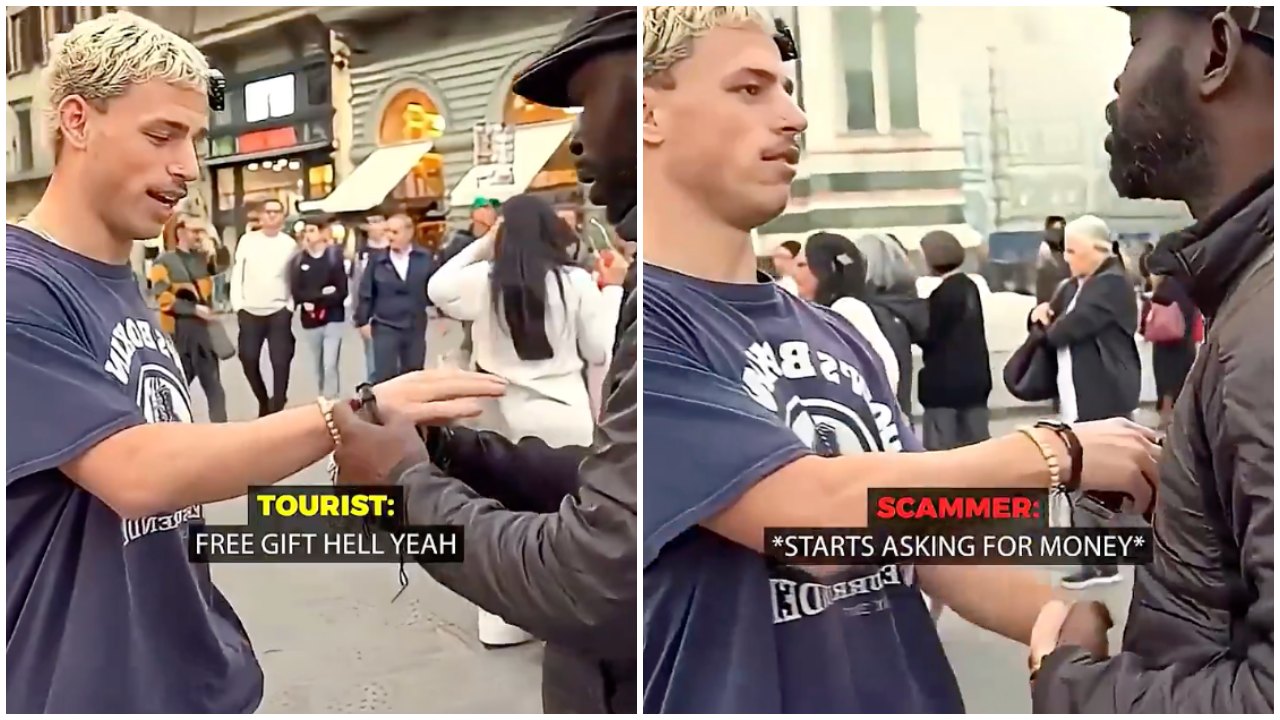
A viral video shows a tourist pushing back after a man allegedly tried the so-called "free bracelet" scam.
In a clip reshared by X user @muskytylerey, a man approaches another and offers him a free bracelet. The tourist, excited to receive something for free, or perhaps already aware of the scam and simply playing along, accepts the bracelet and puts it on.
"Scammer targets the WRONG tourist ??
— Viral Courtroom (@musktylerey) July 1, 2026
Tries the 'free gift' bracelet trick… gets absolutely HUMILIATED instead ? pic.twitter.com/YkTeHqt89p
The "Free Bracelet" Scam is Known to Happen in Places Like Rome and Paris
After the tourist puts on the bracelet, the man tells him it's for good luck. But just seconds after giving him the "free" gift, he starts asking the tourist for money.
"Nah, nah, it's a free gift, bro," the tourist tells him. "If it's free, you always take it. You never give them anything in return." The man, visibly unhappy that he isn't getting any money, continues demanding that he be given something. "Give something," he says. "Nah, it's alright, bro," the tourist replies. "This is my work," the man continues to say, and then follows the tourist, even grabbing at his wrist.
The tourist then tries to explain what "free" actually means. "If I take a free sample at a restaurant, I'm not going to vomit it out when I'm done with it," he says.
As the man becomes more aggressive, with people nearby watching, the tourist decides to give him what he wants — something.
"Alright, I got something for ya," he says before reaching into his pocket and raising his middle finger, a gesture commonly used as an insult as a way of saying "F you." "F--- off, mate," he tells the scammer.
While the clip ends there, there are plenty of other videos online showing the same scam playing out and warning tourists not to fall for it.
According to travel advice shared online, the scam typically works like this: Someone approaches a person at a tourist hotspot in cities like Paris or Rome. They often begin with a compliment before offering what they say is a free bracelet, sometimes made from nothing more than a piece of string.
Once the bracelet is accepted, the scammer becomes much more aggressive, insisting the person pays for the bracelet even though they told them it was free. In some cases, these people work in groups and will even surround tourists, making them feel pressured into handing over money or valuables.
To avoid getting caught up in the scam, many travelers recommend that people don't accept anything from strangers, even if they are persistent and claim it’s free.
The Daily Dot was unable to independently verify the claims surrounding the video, which has been widely shared on social media.