A startup called Deveillance is promoting a device it claims can detect and disrupt nearby listening devices using artificial intelligence.
The gadget, called Spectre I, went viral after its founder, Aida Baradari, posted about it on X, tapping into widespread fears that smartphones, smart speakers, and other devices secretly record conversations.
While the pitch sounds like something out of a spy thriller, security researchers say many of the technology's claims remain unproven.
Either way, the virality of the post advertising the tech suggests the demand is there as people increasingly worry about privacy.
Spectre I makes a lot of promises
On Tuesday, Deveillance founder Aida Baradari posted a video promoting a device she calls Spectre I. The post gained over 3.6 million views in a little over a day on X.
"Smart devices and AI recorders are all around us, collecting our conversations and turning them into data," she says. "Our data is leaked, sold, and used to influence us. Our behaviors. Our opinions. Our sense of self."
Today, we're introducing Spectre I, the first smart device to stop unwanted audio recordings.
— Aida Baradari (@aidaxbaradari) March 3, 2026
We live in a world of always-on listening devices.
Smart devices and AI dominate our world in business and private conversations.
With Deveillance, you will @be_inaudible. pic.twitter.com/WdxmnyFq1I
Baradari is, of course, selling a solution to this problem. She claims that Spectre I is the "first smart device that stops unwanted audio recordings from happening around you."
Not only can is detecting listening devices, but it can also send "customized signals" generated by AI to disrupt them, according to the founder.
"It's not just about privacy anymore," she adds. "This is about freedom."
Pre-orders offer the device at $1,199.99 with a 30 percent off coupon that brings the price down to $839.99.
Many of those who own devices like Alexa or smart phones or an everyday computer worry that the technology is listening in on their every conversation. In 2023, marketing specialist Digital Third Coast surveyed over 800 Americans and found that 60 percent think their phones are eavesdropping.
That number increased to 74 percent for Alexa owners.
Whether Spectre I is an adequate solution remains to be seen.
Can Deveillance really free you from corporate eavesdropping?
With so many people practically resigned to the idea of constant corporate surveillance, the promise of a solution is appealing. Nobody likes it, but navigating the world without a smartphone has become nearly impossible. So the idea of "deveillance" sounds pretty appealing.
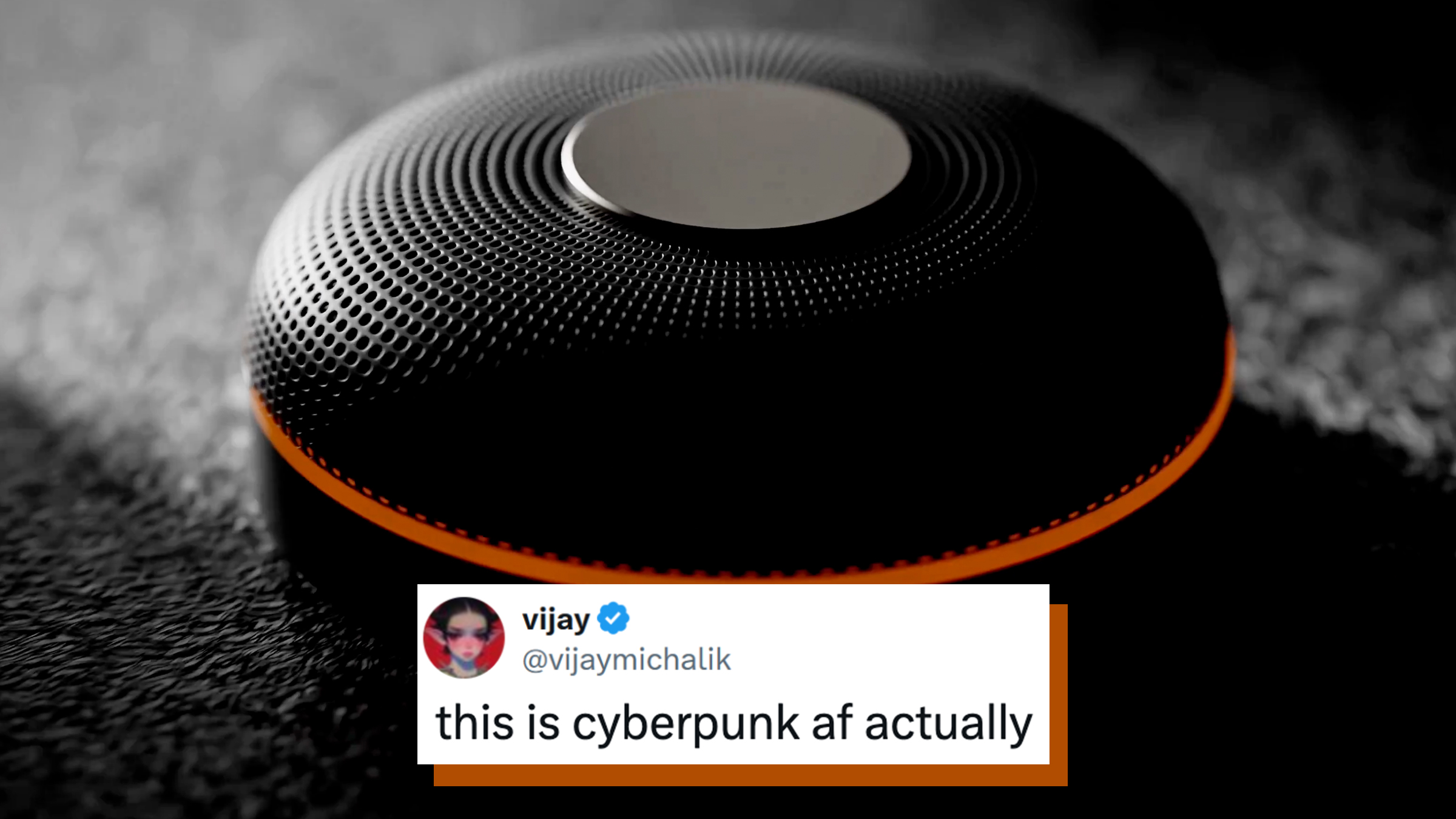
In a popular response, @vijaymichalik called it "cyberpunk af actually."
Meanwhile, @Babygravy9 pointed out that countering surveillance tech is a growing industry unto itself.
"People are designing wearable projectors that literally project a new face on top of your own; infrared glasses that trick cameras; hyper-realistic latex masks; and specially knitted sweaters that make cameras identify you as a giraffe," they wrote.
Unfortunately for those who are excited about Deveillance, as the hype grew, so did the number of commenters expressing doubt about Spectre I.
Citizen Lab researcher John Scott-Railton posted a thorough thread on X, bringing Baradari's claims into question. He's particularly skeptical about the claim that AI can detect mics and generate disruptive signals with "novel physics."
Seen this viral tweet about a portable audio jammer?
— John Scott-Railton (@jsrailton) March 3, 2026
Looks cool, right? It also looks quite similar to 100s products sold on Alibaba & in spy shops for years. Or as DIY kits for $50 in parts.
They use ultrasonic noise to overwhelm very close-by microphones.
I'm skeptical… pic.twitter.com/2JInYmSolF
"This would be extraordinary and would require equally extraordinary proof if true," he said.
"I suspect that the reality may be more like using WiFi etc to scan for devices. This is not novel physics. The problem: many of the microphones that people are most worried about don't emit wifi or bluetooth etc. Or could be a phone in airplane mode."
He listed several other issues with the tech and pointed out that similar devices already exist while DIY kits sell for as little as $50. He and Baradari are now in a protracted argument on these subjects under her post.
The internet is chaotic—but we’ll break it down for you in one daily email. Sign up for the Daily Dot’s newsletter here.