


A cosmetic chemist is going viral after tossing a bucket of cold water on the idea that today’s makeup is turning warmer because brands can’t get their hands on blue pigment.
Javon Ford (@javonford16), a Los Angeles cosmetic chemist, jumped in after a creator claimed that “modern makeup [is] getting warmer and warmer because we are in a blue pigment scarcity.”
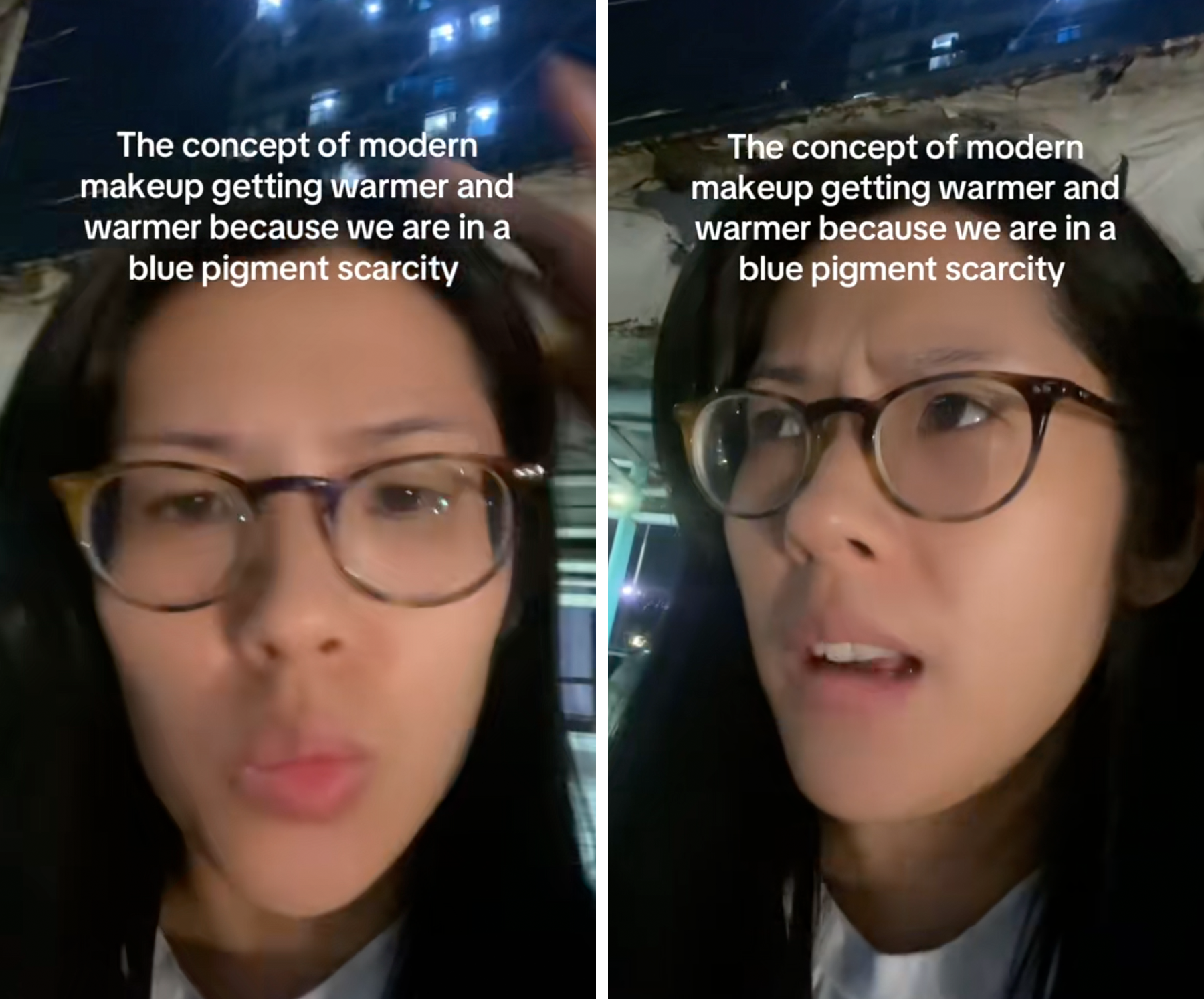
Ford says that simply isn’t true, and in a new video, he breaks down exactly why the theory doesn’t hold up. His explanation has clearly struck a nerve. As of Friday, his clip had pulled in more than 162,900 views.
Is there a shortage?
Ford says absolutely not.

“No, there’s not a blue pigment shortage,” he says at the top of his clip. The real issue, according to him, is that most brands don’t bother adding blue pigment to their foundations. He points to L’Oréal and a handful of others as the rare exceptions.
To double-check the rumor, Ford says he contacted two global pigment suppliers. Neither had heard a word about any shortage.
He explains that “the standard blue pigment used in complexion makeup is ultramarine,” which is created by reacting sulfur with kaolin clay and a few other ingredients. Those materials, he says, are not in short supply.
If you want formulas with the right undertones, he points to L’Oréal-owned lines such as L’Oréal or Urban Decay, which he says are “inclusive of those undertones.”

He adds that around seven years ago, the company’s lead chemist was a Black woman, Balanda Atis, who helped push the industry toward a wider shade range. And if L’oréal isn’t your brand, he says you can always mix in blue pigment drops.
How Atis changed the face of makeup at L’Oréal
Balanda Atis didn’t just tweak foundation formulas. She changed what was possible. Her discovery that ultramarine blue could unlock deeper, truer, more vibrant foundation shades finally solved a problem that had plagued makeup for decades: darker tones that looked dull, flat, or straight-up ashy.
Atis, a chemist at L’Oréal, noticed what so many women of color already knew. The standard mix of white, yellow, red, and black pigments wasn’t cutting it. Those ingredients could get brands close, but not close enough. The colors were muddy. The undertones were off. And the industry had convinced itself this was simply “good enough.”
She didn’t buy that.
@javonford16 #makeup #makeupforoliveskin ♬ original sound – Javon Ford Beauty
Around 2007, she began collecting skin-tone measurements, and the patterns were obvious once she saw them. Something was missing. The answer turned out to be ultramarine blue, a pigment that most companies avoided because it was notoriously difficult to use in complexion products.
But Atis and her team figured it out. Adding controlled amounts of ultramarine blue gave the formulas depth and dimension without making the shades look harsh or artificial. It was the breakthrough the industry claimed didn’t exist.
Once she presented the findings, L’Oréal built the Women of Color Lab and put Atis in charge. The research led to over a dozen new foundation shades across major brands like Lancôme, Maybelline, and Giorgio Armani. It also pushed the rest of the beauty world to expand their own shade ranges or risk looking out of touch.
One of the most visible results was the Lancôme shade 555, the exact color worn by Lupita Nyong’o in her campaigns. Atis has called that moment groundbreaking, and she’s right. It marked a shift in how prestige beauty showed — and served — women of color.
Her work didn’t just widen the shade chart. It forced the industry to rethink who makeup is for and what true inclusivity looks like.
Viewers recommend other inclusive brands
Viewers who watched Ford’s stitched video had plenty to say, and many pointed out that while L’Oréal may set the bar on shade range, it isn’t the only brand they trust.
“Dior and Armani add blue,” one commenter noted. “I was so disappointed McGrath doesn’t.”
Another person chimed in that “About Face has also done me good for blue and cool tones.”
Someone else said they’ve had luck with Korean base products, explaining, “I’ve lately found Korean base products are often more olive and cool tones … no idea about the specific pigment ingredients, but they definitely work better for me — no more looking weirdly jaundiced whenever I wear foundation.”
Others pushed back on the idea that brands skip blue pigment because it’s costly, arguing there’s no excuse for major companies to cut corners.
“When they say, ‘blue pigment is expensive, that’s why everything is warm,’ uhm, we’re talking about multi-billion dollar companies here,” one woman pointed out.
Another makeup artist weighed in as well and said, “Yeah, I’m a makeup artist, and if we need to, we can always just adjust using adjusters,” adding that it tracks with what pros have been noticing.
A third person wished more brands would get it right, saying, “Even some neutral-toned concealers have me looking like the peanut butter baby or an oompa loompa.”
Plenty of commenters also thanked Ford for breaking things down so clearly.
“I just love how educated and knowledgeable you are about this topic,” someone wrote. “My fave beauty scientist/creator.”
Another called the video “interestinggg,” and a third told him, “Love that you ALWAYS come with fact!”
The Daily Dot has contacted Ford via email.
The internet is chaotic—but we’ll break it down for you in one daily email. Sign up for the Daily Dot’s newsletter here.


